

At the core of this transformation are LLMs and the rise of AI-driven development methods, processes, and tools. These advancements are reshaping the entire software development life cycle (SDLC) and will have far-reaching impacts on how products are built, maintained, evolved, and even recycled.
Instead of relying solely on traditional coding, testing, and release cycles, AI brings a new layer of intelligence that:fd
- Accelerates development by generating code, documentation, and test cases from natural language prompts.
- Reduces errors by catching issues earlier through AI-powered debugging and automated QA.
- Optimizes maintenance by suggesting improvements, refactoring, and patching vulnerabilities in real time.
- Evolves products continuously by analyzing user behavior and recommending new features.
- Recycles and repurposes code across projects, making reuse more efficient and scalable.
These changes don’t just impact developers—they fundamentally alter how businesses adapt to customer needs, making them more agile, responsive, and competitive.
If we look at the software development process over the last two decades, it has mainly been about careful planning across SDLC process, precise development cycle , and often painstaking debugging, deployment and maintenance.
Traditional development demanded: Traditional software engineering values designing for clarity and constraints—carefully thinking through data models, selecting the right design patterns, and writing at least a minimal specification before coding begins.
- Writing code line by line with strict attention to detail.
- Long cycles of design, build, test, and release.
- High dependency on manual QA and documentation.
- Delays caused by bugs, integration challenges, and resource bottlenecks.
This approach took months or years to launch—with significant costs and risks involved.
The most important aspect of building a sustainable and scalable technical platform is to first understand the business mission, vision, and customer personas. The key question is: What value will the system add for the end customer? This understanding will help provide the right solution, one that suits the current state of the business and scales as the business grows. If every team is aware of this fact, it will foster accountability and a sense of involvement at every level of the tech organization. I always encourage developers not to write code unless they understand the value it brings to both the customer and the business
With the progress of open-source and paid software, the effort and complexity of building core components have become much easier compared to a decade ago. This means teams can spend 100% of their effort on providing technical solutions to business problems rather than spending effort on building the tech stack from the bottom up. This process has been further accelerated with the advance of cloud hosting services like AWS, GCP, and Azure. Below are some of the key guidelines, concepts, processes, and principles for providing fast and scalable technical solutions. I have highlighted some of the basic steps I encourage teams to follow.
The AI-Assisted Engineering Approach
The rapid progress of LLMs in understanding and generating text—including programming languages—has been a game changer. Trained on vast amounts of both code and natural language, these models can now interpret intent from prompts and translate them into working software.
But there’s a catch: clarity matters. Just as vague requirements confuse human developers, vague prompts lead to incorrect or inefficient AI-generated code. This is why many are calling prompt writing the new programming literacy. The more precisely you articulate your intent, the closer the AI’s output will match your needs. On the opposite end of the spectrum from vibe coding is AI-assisted engineering—a more structured, methodical way of building software with AI as a copilot at every step. In this model, the developer remains firmly in the driver’s seat, while AI provides intelligent support across the entire software development life cycle (SDLC).
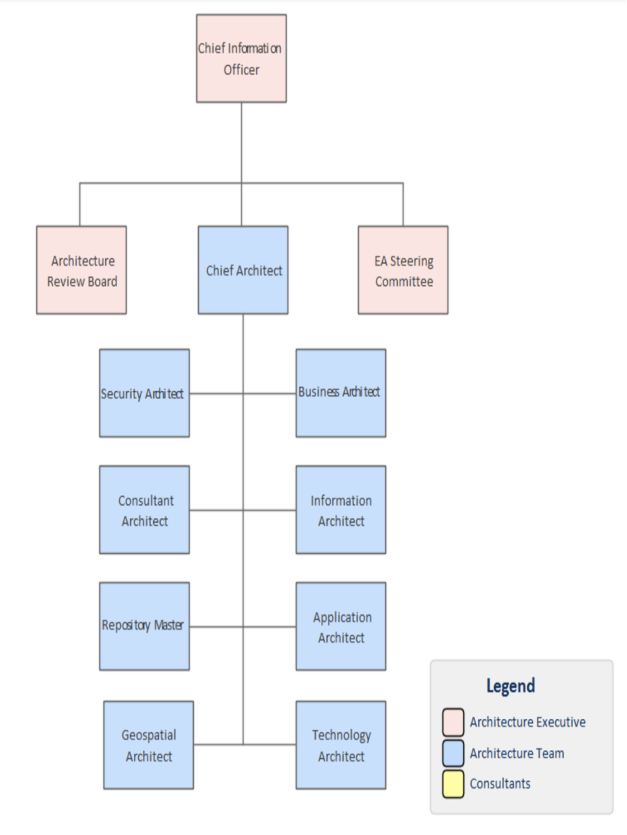
Architecture Org
Team and Governance Process
Architecture team has to closely work with PMO office to asses Risk, cost and benefit
While choosing an Architecture blocks we have to make sure that we are aware of changing business requirements and development new technology and algorithms in market. The reason could be the tech stack chosen today can become out dated very soon,  current tech stack may not be supported by source company, a new much improved version is available etc
Below are key tech road map time period to consider :
1. Strategic - Long term in the range of  5 years  Eg  Choosing Integration layer , Data store , Analytic cluster, Micro services Arch
2. Tactical - Mid term in the range of 1 - 2 years . Eg : Mater Data Management, Delivery System, Warehouse management
3. Solution - Short term in the range of 6 - 12 months. Eg External library, API gateway, SDK's , chat bots
Documentation
It is important to document choices , pros and cons , decisions make , detail information , constrains , risks , assumption etc some of key sections of Architectural documents are
1. Business requirements
2. Roadmap
2. Information , Application ,Traceability and Technical requirements
3. System performance matrices, monitoring , reporting, alerting and fail over guideline
4. Guide lines and time frames
5. Models (UI/UX ,logical , physical , CI/CD etc)
6. Assumption and principles
7. Tools
8. Security
Microservices
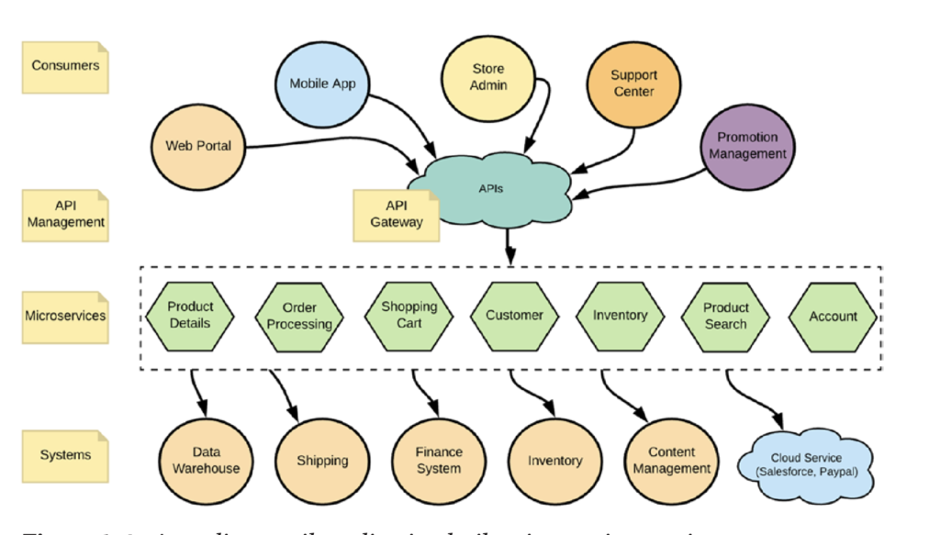
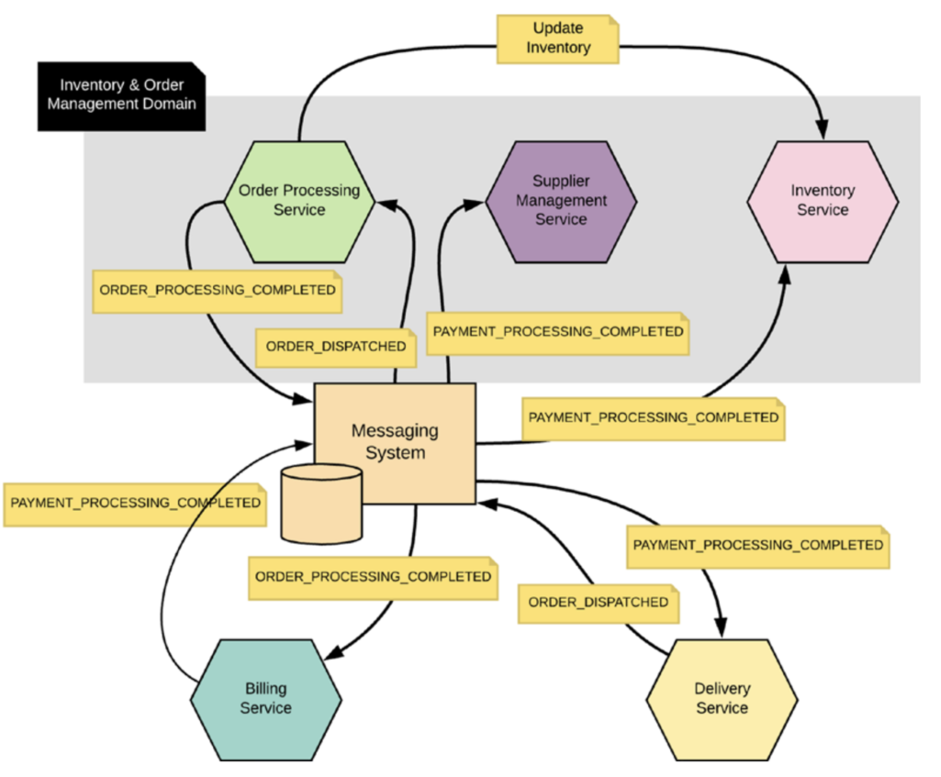
Identifying different types of microservices based on their interactions and using the most appropriate technologies to build them is the key to building a successful microservices architecture. Microservices have replaced the monolithic way of developing enterprise applications. This approach is well suited to the Agile methodology of software development. I will not go into the details of microservices development, as it has become a standard across industries. Instead, I would like to highlight some of the benefits it provides for developers, testing teams, build and deployment teams, and production monitoring team members
The microservices architecture is ideal when your current enterprise
architecture requires modularity.Your software application has to embrace container-based
deployment.If your system is far too complex or Understanding business capabilities is quite critical for designing microservices
Some of Basic principle of Microservice
1. Business Oriented
2. Autonomous: Develop, Deploy, and Scale Independently
3. Failure Tolerance
4. Decentralised Data Management
5. Observability
Design principle :
1.High Cohesion And Loose Coupling
2.Resilience
3.Timeouts
4.Circuit Breaker
5.Steady State
6.Fail Fast
7.Observability
8.Automation
9. Deploy in Containers
Benefits of Micro service Architecture
Agile and Rapid Development of Business Functionalities : In waterfall model or other big bang design team needs to understand almost all requirements in detail. Team need to spend huge effort on
1. Time to come up a system design, which can change when we start implementing
2. Complex to develop and integration will be challenging, requires rework later
3. Consumed huge effort for testing process
4. Difficult to manage system and software configuration
5. Complex code branches and parallel release
6. Deployment failure
7. Difficult to trace and analyse issues in production
8. Managing change without impacting other modules will be difficult
With advance of micro services Architecture all of the above mentions issues can be easy address, with agile release to production we can get early feedback from customer which will help to design better feature and products.

Some of key benefit of adopting Microservice Architecture  are :
1. Agile and Rapid Development of Business Functionalities
Replaceability
Failure Isolation and Predictability
Some of drawback of Microservice:
1. Additional complexity and new problems to deal with, such as network latency, message formats, load
 balancing, fault tolerance and monitoring
2. Complexity in Automation, , testing and deployments
3. Moving responsibilities between services is challenging and difficult
Examples of services
1. Search services
2. Catalog services
3. Restaurant services
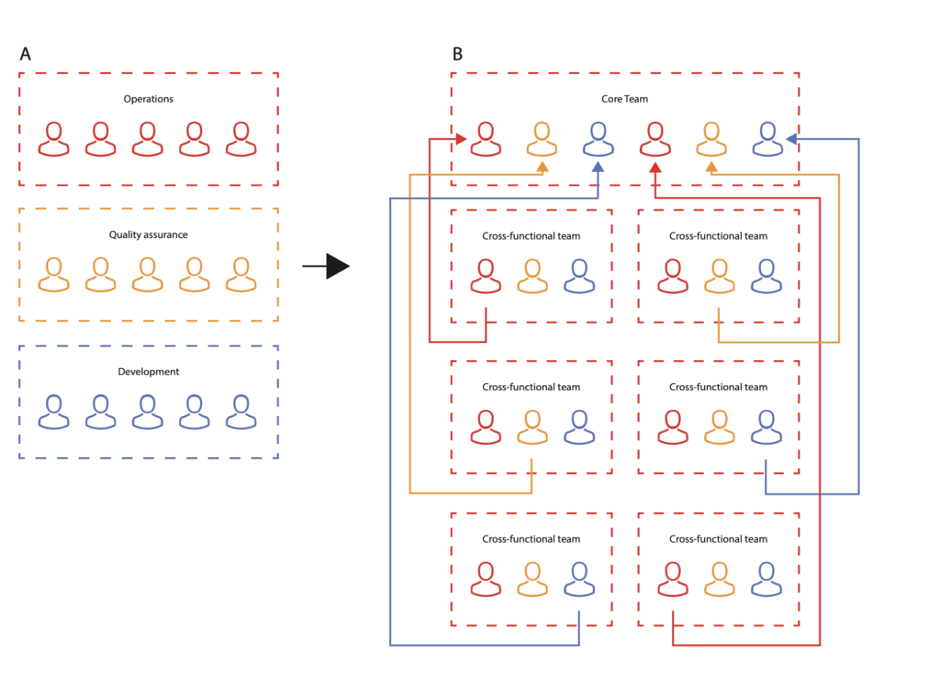
Team
Qualities of Good Architecture
Robust: The architecture should sustain minor changes in the system.
Feasible: The architecture should meet business requirements, the skill set available in the market, and the cost of implementation.
Durable: The architecture should withstand the passage of time and be resilient to changes in the business.
Flexible: It should be able to adapt to changing conditions and should have sufficient support and knowledge in the market for easy implementation and adoption.
Scalable, fault-tolerant, and consistent in performance
Some of the tools that can be used to document and communicate System Architecture
1. Business process diagram
2. Component, Activity and  class diagram
3. Architectural patterns and deployment diagram
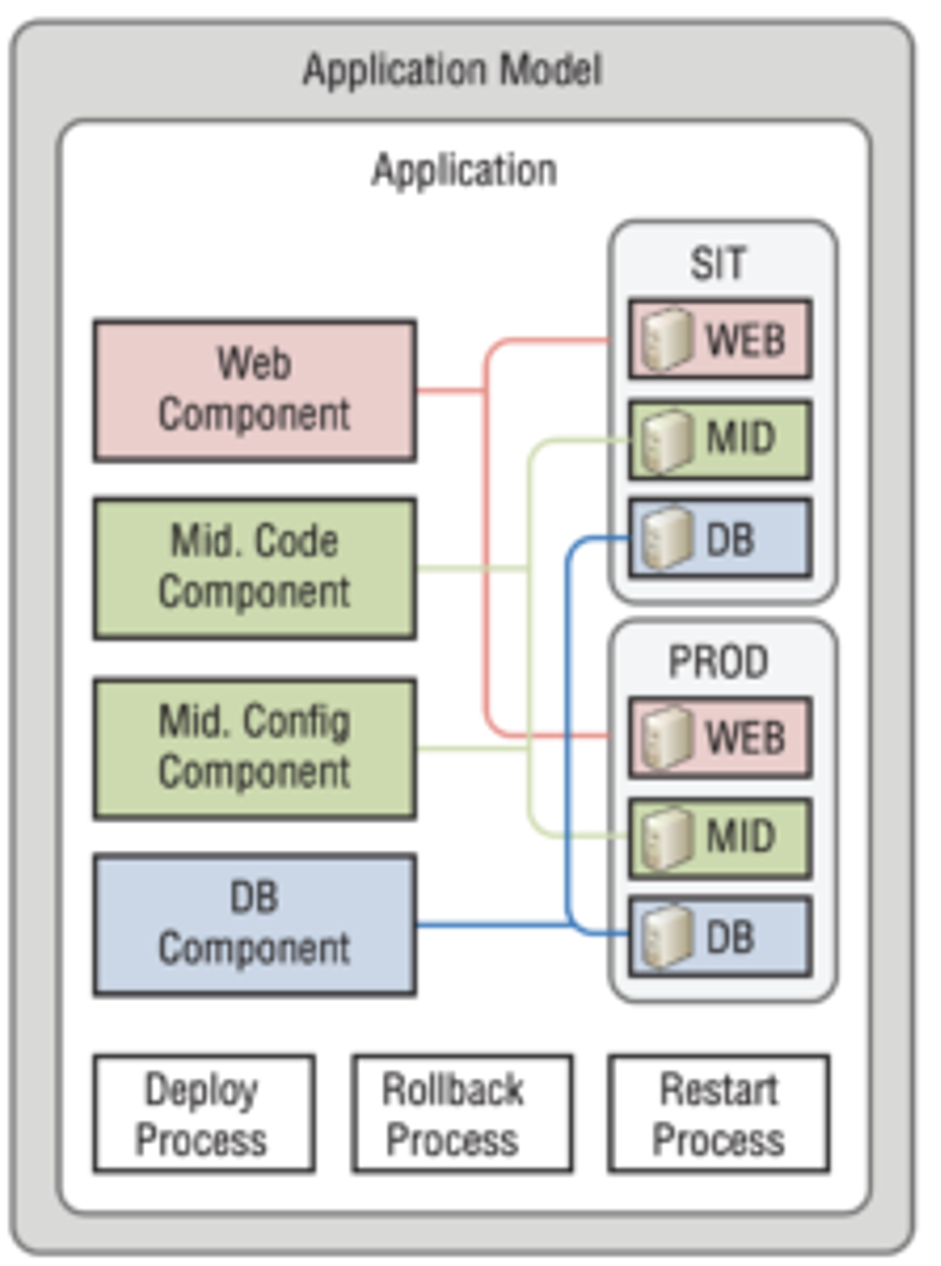
4.  Different development environment and product environment
5. System configuration setup
6. heat map
7. Integration documents
8. Micro service map (Swagger document)
9, Monitoring and response dashboard
10. Coding standards and code scan tools
12. Security requirement documents
13. System performance documents
14. Audit and compliance documents
Team and Governance Process
Architecture team has to closely work with PMO office to asses Risk, cost and benefit
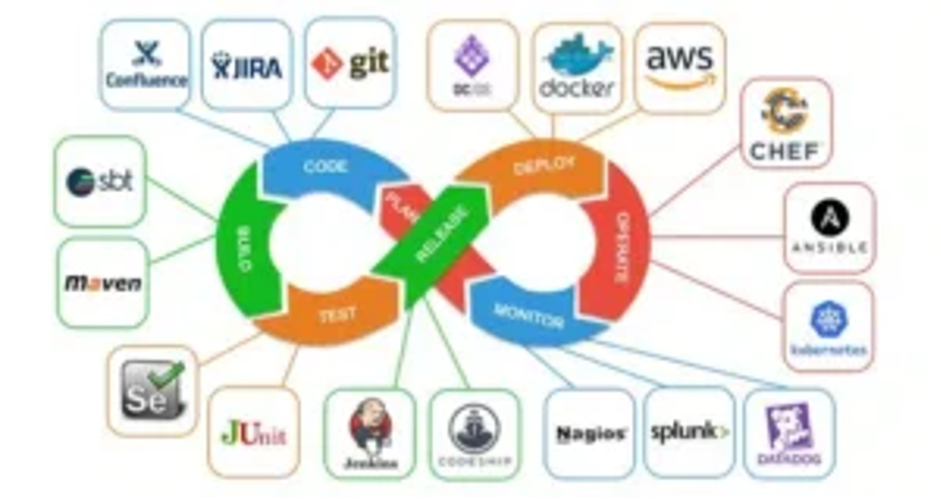

DevOps
DevOps is a crucial component of enterprise platforms. It consists of code, hardware, software, processes, and tools. It represents an important cultural change that any company needs to adopt to increase the speed of execution, enhance code quality, and provide observability of activities in the production environment. This, in turn, helps take corrective action at the earliest to prevent any business loss. Additionally, we should be cognizant that this approach may incur significant costs if not monitored and controlled. Refer to my work at Swiggy for more details. I have highlighted some of the key processes and procedures below.
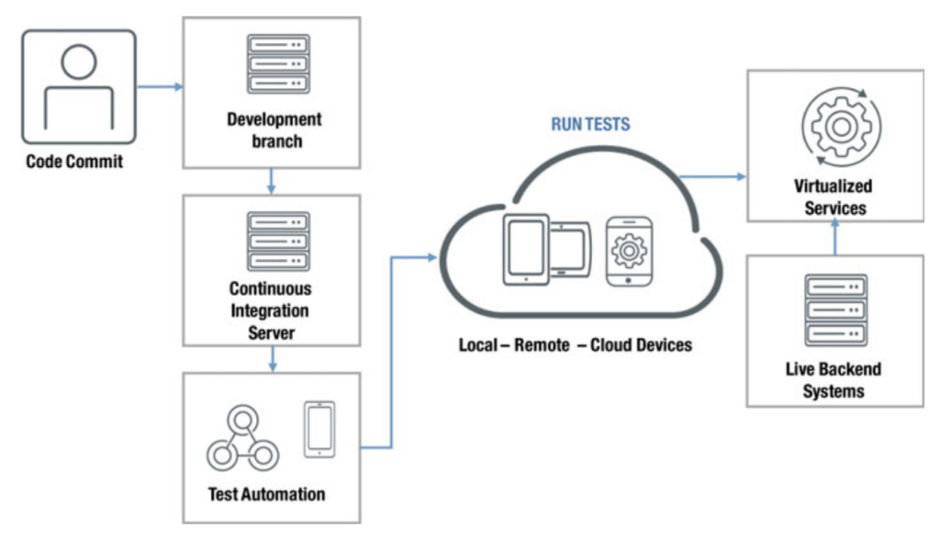
Adopt Continuous Integration:
Adopt Agile development practices and DevOps Culture
Adopt continuous Integration
1.  Maintain a single-source repository
2. Automate the build process
3. Make your build self-testing
4. Every day code commit
5. Test in production clone Env
6. Build and deployment status to every team members
7. Multiple parallel releases

Adopt Infrastructure as Code:
1.  Agile release cycle
2. Versioning environments and code
3. On Demand Computing Resources for Scale and Speed
4. continuous monitoring
5. Test in production cloned Env
6. Build and deployment status to every team members
7. Test Data Management and automation
AI engineering based process to build and scale
The Process Shift: Iterative AI Collaboration
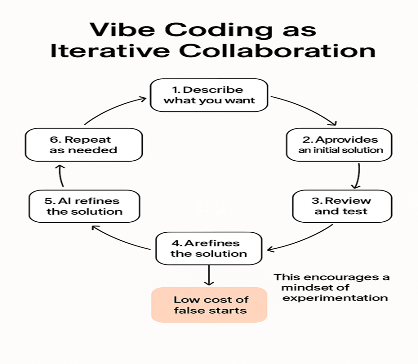
One of the most important aspects of vibe coding (intent-based programming) is that it’s not about writing a single perfect prompt and expecting flawless results. Instead, it’s an iterative, collaborative process between human and AI, resembling a rapid feedback loop.
Here’s how it typically unfolds:
- Describe what you want – You frame the problem or feature in natural language.
- AI provides an initial solution – A draft snippet or implementation is generated.
- Review and test – You check if the output works and meets your intent.
- Refine your request or code – Adjust prompts or tweak the implementation.
- AI refines the solution – It adapts based on the updated context.
- Repeat as needed – Continue until you’re satisfied.
- Vibe Coding often appeals to less-experienced developers or those outside the core engineering discipline. Product managers, designers, may lean on this style because it lowers the barrier to entry and provides quick wins. Many treat the AI like a “superpowered Stack Overflow,” giving them full solutions they can tweak and demo rapidly.
- AI-Assisted Engineering resonates more with seasoned developers and teams. Having been burned by fragile or unmaintainable code before, they approach AI with a mindset of discipline first, acceleration second. They’re willing to put in effort up front—like writing a mini-PRD or setting up tests—because they value maintainability and long-term scalability.
Adoption and provision new tools companywide : A wave of new tools is emerging to seamlessly integrate these AI models into coding workflows. From IDE plugins to cloud-based collaboration platforms, AI is being embedded directly into the places where developers work
Tools like OpenAI’s Codex, ChatGPT, Anthropic’s Claude, and others have introduced a new way of writing software. Developers can describe what they want in natural language, and the AI generates functional code


Leave a Reply